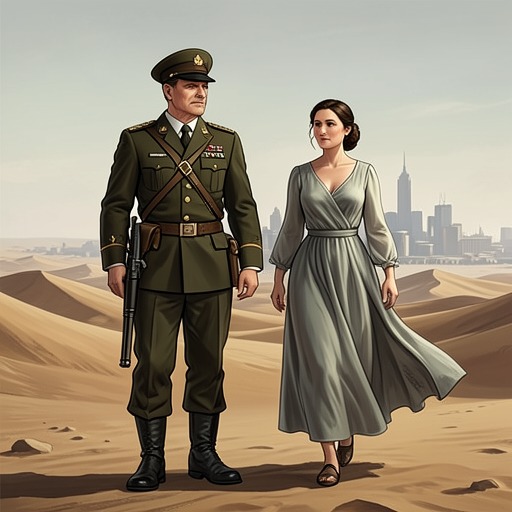
Don John of Austria
Don QuixoteDon John of Austria is presented as the commander of the allied Christian fleet at Lepanto and as a central military figure in the campaigns against Ottoman power in the Mediterranean. His leadership connects the battle that Captain Viedma recalls with the loss and recapture of Tunis, while his earlier association with Cervantes gives him a place in the author’s own military history.
Command at Lepanto
When Pope Pius V’s alliance with Venice and Spain prepared for war against the Turks, Don John of Austria was appointed commander-in-chief. He came to Genoa and continued to Naples, where the fleet gathered before joining forces at Messina. Cervantes’s account of the campaign presents Don John’s arrival as the focus of the military preparations that stirred Captain Viedma to leave his prospects of promotion in Flanders and seek a place in the expedition.
The allied fleet encountered the Ottoman force on October 7, 1571. Cervantes was serving aboard the Marquesa and, though ill with fever, insisted on taking his post; he was wounded in the fighting. The account of Cervantes’s life adds that Don John personally inspected the wounded the following morning. Cervantes received an increase in pay, and the meeting is also associated with the beginning of a friendship between the two men.
Cervantes and military service
Before Lepanto, Cervantes had left a position in the household of Giulio Acquaviva and enlisted as a private soldier. After recovering from his wounds, he returned to service and took part in subsequent operations, including those around Tunis and the Goletta. In 1575, as he sailed back to Spain, he carried letters from Don John and the Duke of Sesa recommending him to Philip II for command of a company. The recommendation reflects the standing Cervantes’s service had earned; the voyage ended instead with his capture by Algerine galleys and five years of captivity.
Don John’s role in Cervantes’s life is thus conveyed through military service and patronage rather than through an extended personal portrait. The account records the practical consequences of their connection: Don John’s inspection after Lepanto, the increase in Cervantes’s pay, and letters intended to advance his career. Those credentials later became part of the circumstances surrounding Cervantes’s capture, because his captor took the recommendations as evidence that he was a person of importance.
Tunis and the reversals of war
Captain Viedma’s account places Don John’s Mediterranean command within a sequence of changing fortunes. In 1573, Don John seized Tunis from the Turks and installed Muley Hamet as ruler, frustrating Muley Hamida’s hope of regaining the kingdom. The victory did not settle control of the region: in the following year the Ottoman forces attacked the Goletta and the fort near Tunis that Don John had left partly built, and both positions fell.
The narrative sets Don John’s success at Tunis beside the subsequent retreat and the fall of the fortified positions. For Captain Viedma, these campaigns are not distant military history: he describes serving in the fleet and then being captured during the fighting at Lepanto, after leaping onto an enemy galley to assist another vessel. Don John’s command therefore supplies the larger setting for a story in which victory and captivity occur side by side, and where a battle celebrated by one side becomes the beginning of years of enslavement for another.
Place in the narrative
Don John of Austria appears through reports of command, campaigns, and recommendation rather than as a speaking character in the embedded account. His movements organize a historical sequence: the alliance gathers at Messina, Lepanto breaks the expectation that the Turks are invincible at sea, and the struggle over Tunis continues through successive Christian and Ottoman advances. The contrast between military triumph and individual captivity gives these events their narrative force. Don John’s victories alter control of cities and strongholds, while the accounts of Cervantes and Captain Viedma show how service in the same wars could lead to injury, captivity, and the uncertain prospect of return.